What is an HMS (Hostel Management System)? Complete 2026 Overview
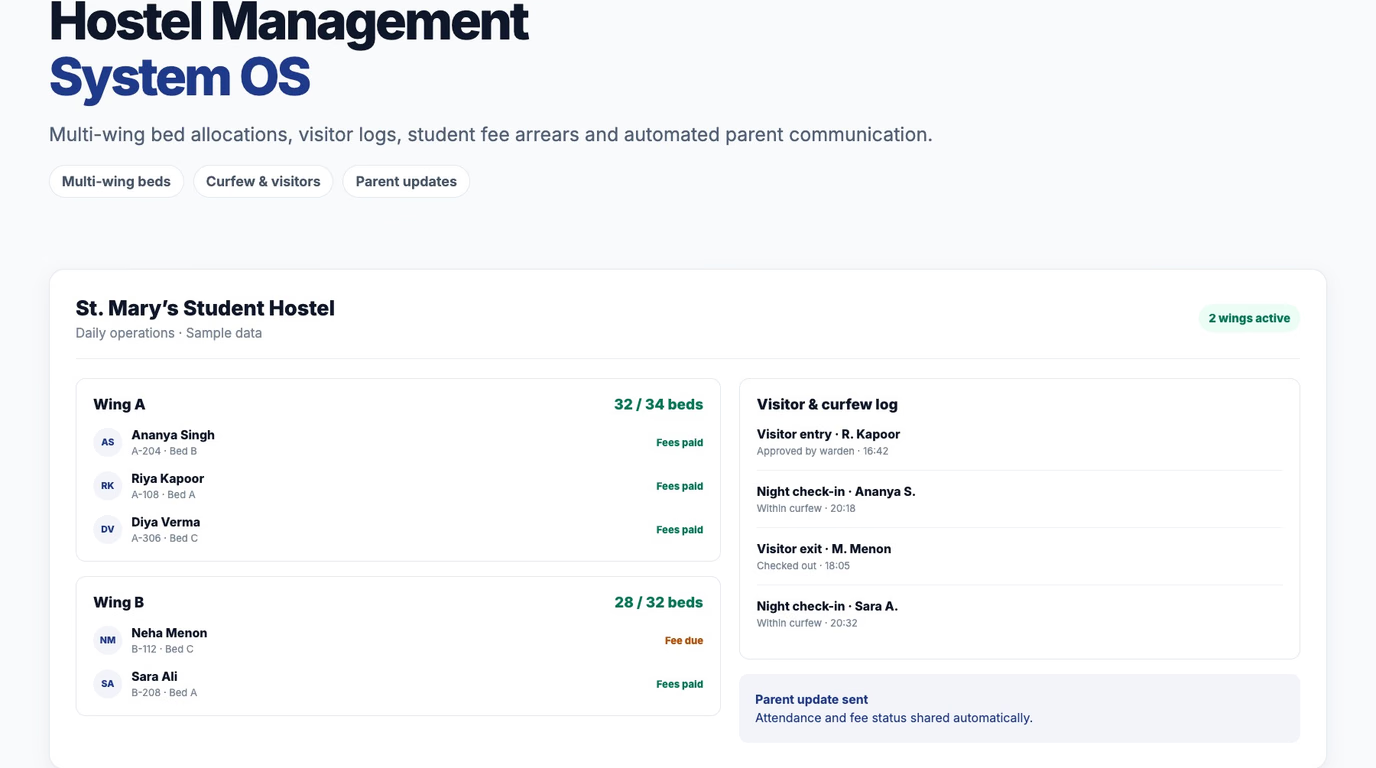
An HMS (Hostel Management System) is a specialized cloud platform engineered to automate the daily administrative, financial, and operational workflows of student housing, coaching hostels, co-living accommodations, and paying guest (PG) properties across India. Whether managing a 40-bed private student hostel in Kota's coaching corridors (Indra Vihar, Landmark City), a working women's hostel in Pune (Viman Nagar, Hinjewadi), or an extensive student hostel network in Bangalore (Mathikere, Koramangala) and Delhi NCR (North Campus, Greater Noida Knowledge Park), an HMS replaces error-prone physical diary registers and fragile Excel spreadsheets with an automated, bed-level digital management hub. While residential property management tools manage entire apartments on multi-year family leases, and hotel PMS software handles short-stay tourist room nights, an Indian HMS addresses the unique operational realities of shared student and youth living: - Granular Bed-Level Inventory: Tracking individual bed slots across single, double, triple, and four-sharing rooms rather than monolithic flats. - Dynamic Student Turnover: Managing staggered admissions, academic semester cycles, and mid-month pro-rata check-ins without disrupting roommate allocations. - Mess & Canteen Meal Toggles: Automating monthly dining billing based on individual meal plan selections ("With Food" vs "Room Only"). - Shared Room Power Allocation: Dividing tiered AC electricity sub-meters fairly among roommates. - Automated WhatsApp UPI Collections: Delivering frictionless 0% transaction fee payment links directly to students and their parents. Explore our dedicated Hostel Management System & Software and discover how modern operators eliminate manual booking overhead with our PG & Hostel Management Software.
Managing rented flats, PGs, or villas in India?
Track rent in ₹, auto-split utility bills, send payment reminders over WhatsApp & issue legal receipts without Excel sheets.
The 6 Costly Failures of Managing Hostels on Paper Registers & Excel Sheets
Most hostel wardens and PG owners start by recording admissions in physical notebook diaries or desktop Excel spreadsheets. While feasible for 10 beds, once a facility crosses 25 to 50 beds, five structural operational bottlenecks inevitably surface: - 1. Double-Booked Beds During Peak Admission: In July and August, when university and coaching admissions surge, wardens taking phone bookings frequently promise the same bed slot to two different students, causing severe reputational damage on move-in day. - 2. Unbilled AC Electricity Consumption: Air-conditioned hostel rooms generate heavy power bills. When wardens forget to record opening meter readings or fail to split units fairly among roommates who travel home for holidays, the owner ends up absorbing thousands of rupees in uncollected utility costs. - 3. Mess & Food Billing Friction: When some students opt out of dinner while others take full 3-meal plans, manual ledger accounting results in mismatched meal calculations and angry disputes during monthly fee settlements. - 4. Awkward Fee Follow-Ups & Delayed Collections: Wardens waste hours knocking on doors or making awkward late-night phone calls to parents chasing overdue fees. Without automated WhatsApp payment links, student fee dues routinely stretch 15 to 45 days late. - 5. Move-Out Security Deposit Fights: Disputed deductions for room damages, painting, or unserved notice periods create shouting matches at checkout. Without an auditable digital settlement ledger, 1-star Google Business Profile reviews multiply. - 6. Police Verification & Form C Compliance Penalties: Under Section 188 of the Indian Penal Code, failing to maintain digitized tenant identity verification records and submit mandatory local police intimation rosters exposes hostel operators to legal liability and municipal fines. Learn why modern operators are phasing out spreadsheets in our detailed operational comparison: PG Software vs Excel Register. To audit your current facility break-even, use our PG Occupancy Calculator.
Core HMS Modules Every Indian Hostel Operator Needs in 2026
To run a modern, dispute-free hostel or PG facility, an HMS must offer these essential software modules tailored to Indian operating conditions:
2026 Comparison Matrix: Best HMS Software in India
Indian hostel operators have diverse operational requirements depending on property size, student demographic, and target budget. Here is how the top hostel management systems compare:
Hostel Management Software Pricing in India: Hidden Fees to Watch Out For
When evaluating hostel management software, operators must look beyond the advertised subscription price. Software in India generally follows three pricing models: - 1. Per-Bed Monthly Pricing (₹15 to ₹45 per bed/month): Standard among legacy mobile apps. While seemingly affordable for a 20-bed hostel (₹400/month), the monthly cost quickly scales to ₹4,500/month for a 100-bed property and ₹13,500/month for a 300-bed portfolio. - 2. The 2% "Payment Gateway Trap": Many apps advertise low monthly software fees but force student payments through integrated third-party payment gateways charging 2% + 18% GST (an effective 2.36% deduction). On a 100-bed hostel collecting ₹10,000 per bed (₹10,00,000 monthly collection), payment gateway fees siphon away ₹23,600 every single month—costing the owner an astounding ₹2,83,200 per year in unnecessary transactional losses! - 3. Direct Bank UPI at 0% Fees (The TenantsFlo Model): TenantsFlo bypasses middleman payment gateways entirely by using direct bank UPI deep-links. When a student or parent pays via PhonePe or Google Pay, 100% of the funds settle directly in the owner's bank account instantly with ₹0 in gateway charges. For a broader market overview across all rental property categories, read our buyer's guide to Property Management Software in India and explore our Rent Collection Software in India.
Step-by-Step Blueprint: Migrating from Excel to an HMS in Under 24 Hours
Transitioning your hostel operations from paper registers or messy spreadsheets to an automated HMS does not require IT expertise or weeks of downtime. Follow this streamlined 4-step implementation blueprint: